
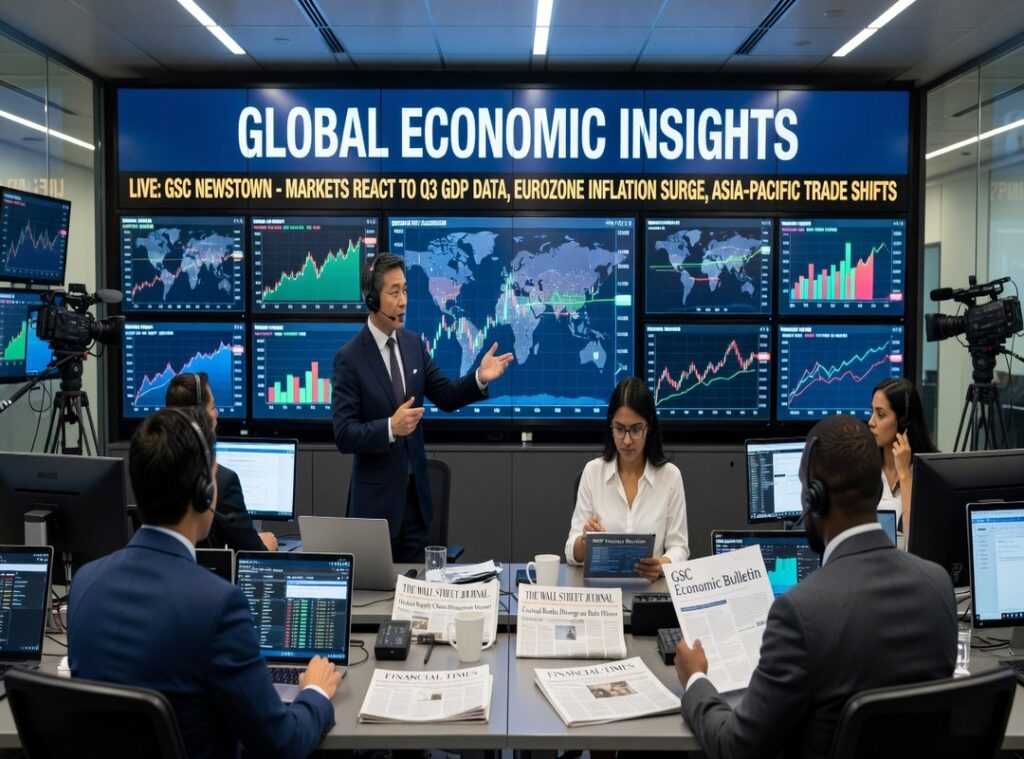
The world economy feels like static on a broken radio.
You hear snippets (interest) rates, inflation, supply chains. But nothing clicks.
I get it.
Most coverage is either too technical or too vague.
This is not that.
We cut through the noise. No jargon. No fluff.
Just what’s actually moving right now.
You’ll understand how World Economy Updates Gscnewstown connect to your rent, your paycheck, your next big purchase.
Not because I say so (but) because the sources are public, trackable, and updated daily. Federal Reserve reports. IMF data.
Real trade numbers. Not headlines.
Why does this matter? Because money decisions pile up. And waiting for clarity means falling behind.
You don’t need a degree to read a chart.
You just need the right context.
That’s what this is.
A clear window into what’s happening (not) what someone hopes is happening.
You’ll walk away knowing what changed, why it matters, and where to look next.
Why Your Dollar Feels Lighter
Inflation means prices go up. Your money buys less.
I saw it at the grocery store last week. Eggs cost $2 more. Gas jumped 40 cents overnight.
You felt that too, right?
It’s not just here. The UK, Canada, and parts of Europe are seeing sharp price hikes. Supply chains are still snarled (remember those container ships stuck in ports?).
And people spent big after lockdowns ended. Demand spiked faster than factories could keep up.
That’s why your rent went up. Why your phone bill got a “network improvement fee.” Why your kid’s backpack costs $5 more than last year.
You’re not imagining it. Your paycheck hasn’t kept pace.
So what do you do? Track every dollar for one week. Not forever.
Just seven days. See where it vanishes.
Switch to store brands. They taste fine. They cost less.
Buy frozen veggies instead of fresh when prices spike. Freeze meat when it’s on sale.
Skip the subscription you forgot you had. Cancel it now.
World Economy Updates Gscnewstown is real. And it hits your wallet first. learn more
Don’t wait for wages to catch up. They won’t. Not fast enough.
You control your spending. Not the Fed. Not the news cycle.
Cut the fluff. Keep the essentials. Pay attention to unit prices.
Not just the sticker.
That bag of rice? Check the cost per ounce. Not the total.
You’ll spot the rip-offs faster.
What Rising Rates Actually Do to Your Wallet
Interest rates are what lenders charge you to borrow money. Or what banks pay you to keep money in savings.
Simple as that.
I watched my cousin refinance her car loan last month. The rate jumped two points from last year. She’s paying $70 more each month.
(That adds up fast.)
The Federal Reserve hikes rates to cool inflation. They want prices to stop rising so fast. It works.
But it hurts right now.
Credit cards? Rates just crossed 20% for many people. Mortgages?
A 7% rate on a $300k loan means $2,000/month instead of $1,400. You feel that in groceries and gas.
But here’s the upside: my savings account now pays 4.5%. It paid 0.06% three years ago. That’s real money if you’ve got cash sitting idle.
So what do you do? Pay down high-rate debt first. Especially credit cards.
Then park emergency cash where it earns something. Don’t chase risky investments just because rates are up.
World Economy Updates Gscnewstown shows this isn’t just US policy (it’s) global.
Europe and Canada are doing the same thing.
You don’t need a finance degree to act. Just know where your money is. And where it costs you most.
Ask yourself: Is this debt worth the price today?
Is the World Economy Accelerating or Stalling?
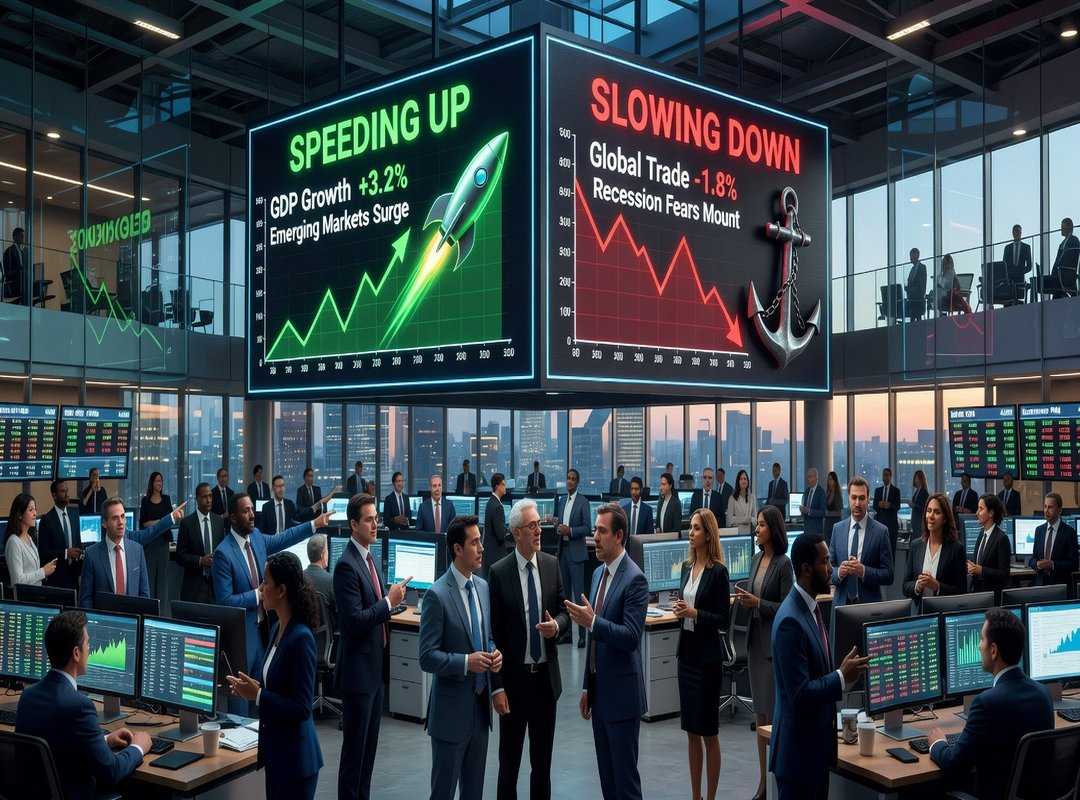
Global growth means the total value of goods and services the world produces is going up. Or down.
In the latest insights on the global economy, you can stay informed by checking World Business News Gscnewstown for updates on market trends and economic forecasts.
Right now? It’s wobbling. Not crashing.
Not roaring. Just… slower than last year.
I watch the numbers. The IMF cut its 2024 forecast. So did the World Bank.
Inflation’s sticky. Central banks aren’t backing off rates yet. (Which surprises no one who pays rent.)
Wars in Ukraine and the Middle East keep energy prices jumpy. Trade tensions add friction. Especially between the U.S. and China.
That hits factories, shipping, and your grocery bill.
Europe’s stuck near zero growth. The U.S. holds up better (but) hiring’s cooling. India’s humming.
Vietnam’s exporting like crazy. Argentina? Hyperinflation’s eating wages alive.
What does that mean for you? Jobs get harder to land in slow zones. Investments shift toward places with real momentum.
Real estate cools where growth stalls. Stocks hiccup when oil spikes.
You’re probably wondering: Is my job safe? Should I move money out of bonds? Good questions. They’re not rhetorical.
For regular updates, check the World Business News Gscnewstown feed. It cuts through the noise on World Economy Updates Gscnewstown.
Growth isn’t abstract. It’s your paycheck. Your rent.
Your kid’s tuition.
And it’s not moving in one direction. It’s lurching.
Jobs Are Changing. Fast.
I watched my cousin get laid off last year. His job was coding Excel macros. Now AI writes them in seconds.
(He’s learning Python. It’s working.)
AI isn’t coming. It’s here. And it’s not just replacing call center reps or data entry clerks.
It’s drafting legal memos, writing ad copy, even debugging code.
You’re probably wondering: Is my job next? I don’t know. But I do know this. Waiting won’t help.
Reskilling isn’t a buzzword. It’s learning how to use AI tools with your existing skills. Not instead of them.
With them.
The gig economy isn’t “the future.” It’s the present. And remote work isn’t a perk anymore. It’s table stakes for half the jobs I see posted.
That doesn’t mean stability is dead. It means stability looks different now. It’s built on adaptability.
Not tenure.
Some people say “just learn to code.” That’s dumb. Not everyone needs to code. But everyone needs to understand how tech changes their workflow.
My friend runs payroll for a small firm. She didn’t learn to code. She learned to audit AI-generated reports.
That’s upskilling.
The pace is exhausting. Yes. The uncertainty sucks.
Yes. But pretending nothing’s changing? That’s worse.
If you’re trying to stay ahead of the curve, start where you are. Not where you think you should be.
For real-world ways to manage this shift, check out What to Manage a Business Gscnewstown.
World Economy Updates Gscnewstown is one place to watch (but) your next move starts with what you do today.
You’ve Got This
I read the news. I check prices. I watch my paycheck stretch less each month.
That’s how I stay in control.
You don’t need a degree to understand World Economy Updates Gscnewstown. You just need to know how inflation hits your grocery bill. How interest rates change your loan payments.
How global growth. Or lack of it (shows) up in your job search.
It’s not about predicting the future.
It’s about seeing what’s already moving (and) adjusting before you’re forced to.
You felt that pinch. That uncertainty. That “why is everything harder now?”
Good.
That feeling means you’re paying attention.
So keep reading. Keep asking questions. Keep connecting dots.
Start today. Open one trusted source. Read one update.
Then make one small financial choice based on it.
You’ll get sharper. Faster. Calmer.
Staying informed about the latest trends and developments is essential for success, and you can start by exploring What to Manage a Business Gscnewstown.
That’s how you win.